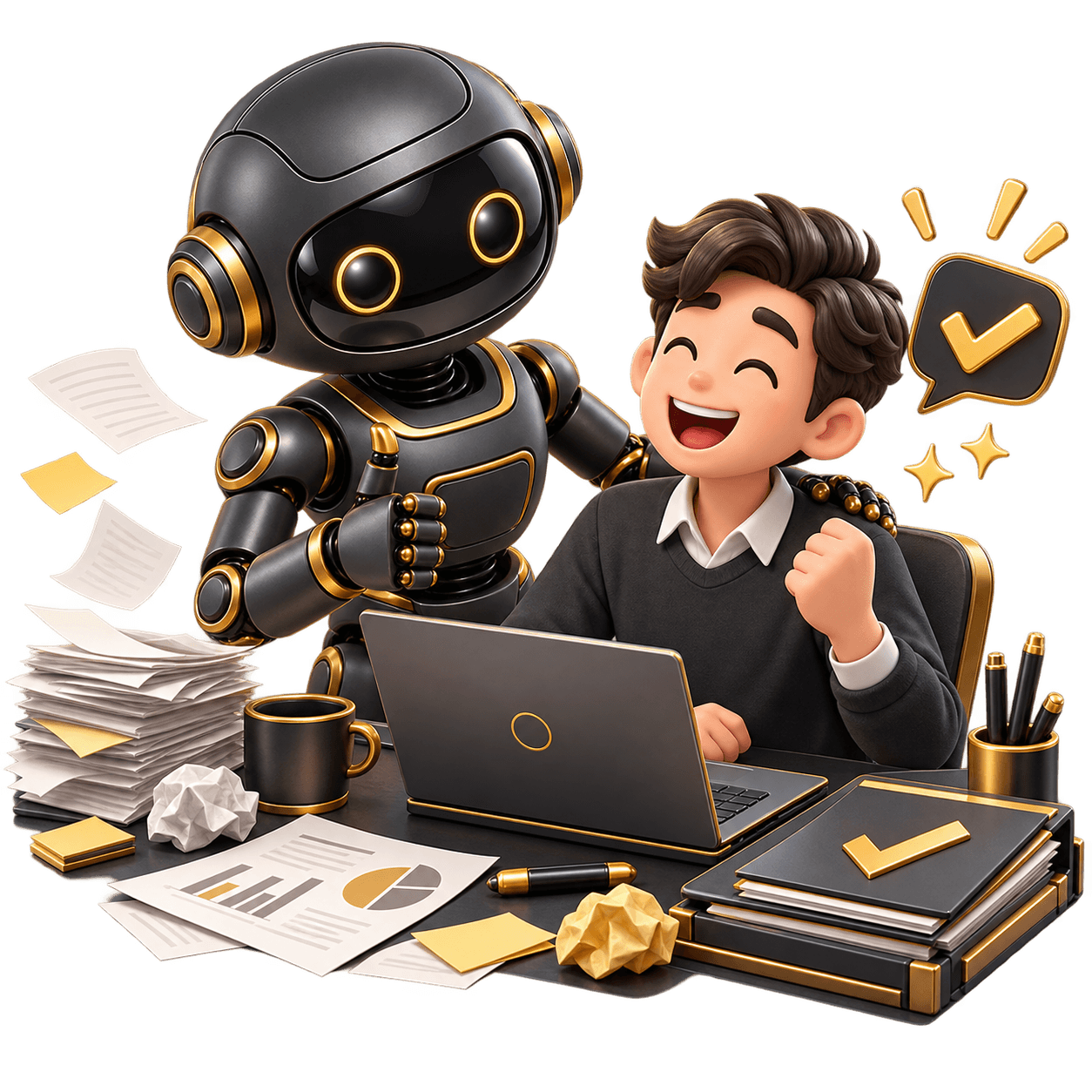
One defined job
Start with something concrete, such as classifying enquiries, preparing a research brief or drafting a proposal.
AI automation and assistants for small businesses
I connect recurring workflows and build assistants for research, quotes and customer communication. Predictable steps use fixed rules. AI prepares information; decisions and approval stay with you.
What the term means
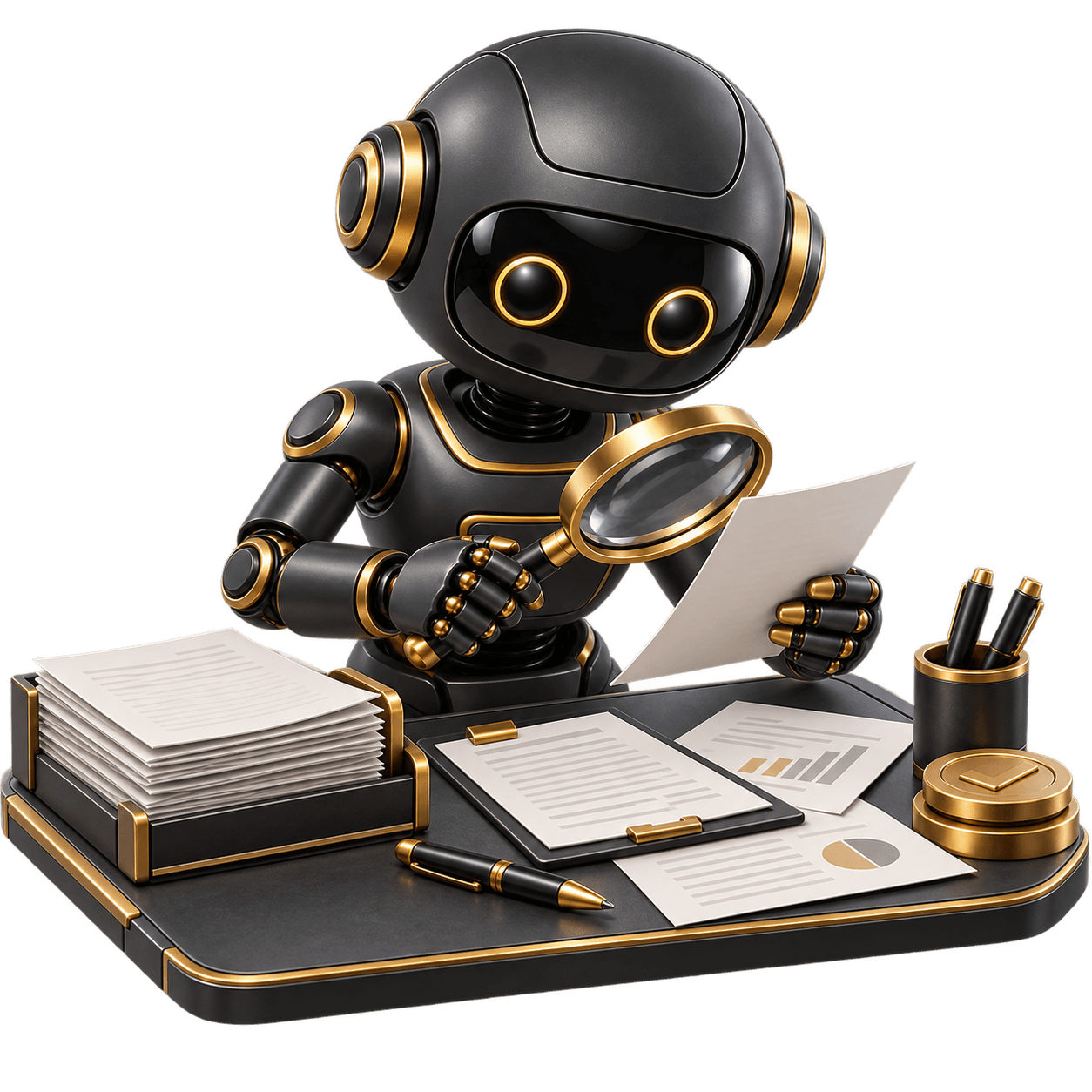
The label describes an operational role, not an autonomous person. The system receives agreed sources, rules and an output format. Accountability and approval remain with your business.
Start with something concrete, such as classifying enquiries, preparing a research brief or drafting a proposal.
Your documents, templates and selected sources set the boundaries. Access is limited to what the job actually needs.
The result should remove groundwork: an organised summary, a draft or a recommendation that a person can check and edit.
How it works
A useful assistant follows a visible route and stops before consequential actions unless a specific approval model has been agreed.
An enquiry, document or direct question starts the defined task.
The assistant works only with the documents, templates or systems selected for the project.
Information is organised, summarised or turned into a first working draft.
A team member checks, corrects and decides what is sent or accepted.
Good first jobs
The best starting point is frequent, easy to describe and produces an output your team can verify.
Several sources are brought into one structured overview with references that can be checked.
Key details from an enquiry are collected and organised into a draft based on your template.
Repeated customer questions receive a draft in the agreed tone, without automatic sending.
Approved documents become easier to query so the same answer is not reconstructed from scratch.
Connect incoming email, document data, calendars and lists through explicit rules, review steps and an activity log.
Control
AI models can be wrong. Source boundaries, permissions, review steps and the handling of uncertain cases are therefore part of the design.
Frequently asked questions
Clear answers about scope, controls, existing tools and the first project step.
No. At Werkstern, the term describes a custom assistant for one defined task. It prepares work; accountability and approval stay with people in your business.
A general chat account does not automatically follow your workflow, approved sources, output format or review route. A custom assistant is designed around those concrete boundaries.
Often, yes, when the selected model, document formats and quality requirements support the use case. Representative German and English examples are tested before a broader rollout.
The sensible first version normally prepares a draft for review. Any later automatic action requires a separate decision about risk, permissions and the appropriate approval path.
That depends on interfaces, permissions, file formats and vendor terms. Compatibility is checked before it is promised or included in an offer.
Data sources, permissions, providers, retention and access need a use-case-specific review. Werkstern does not make a blanket compliance promise without that assessment.
Bring one recurring task, representative examples and the output your team needs. I use those to define the smallest useful prototype and its review route.
When inputs and decisions are predictable, a fixed rule is usually simpler and easier to verify. AI is used only where content needs interpretation; uncertain cases go to a person for review.
Next step
One representative input, the result you need and the person who reviews it today are enough for an initial assessment.